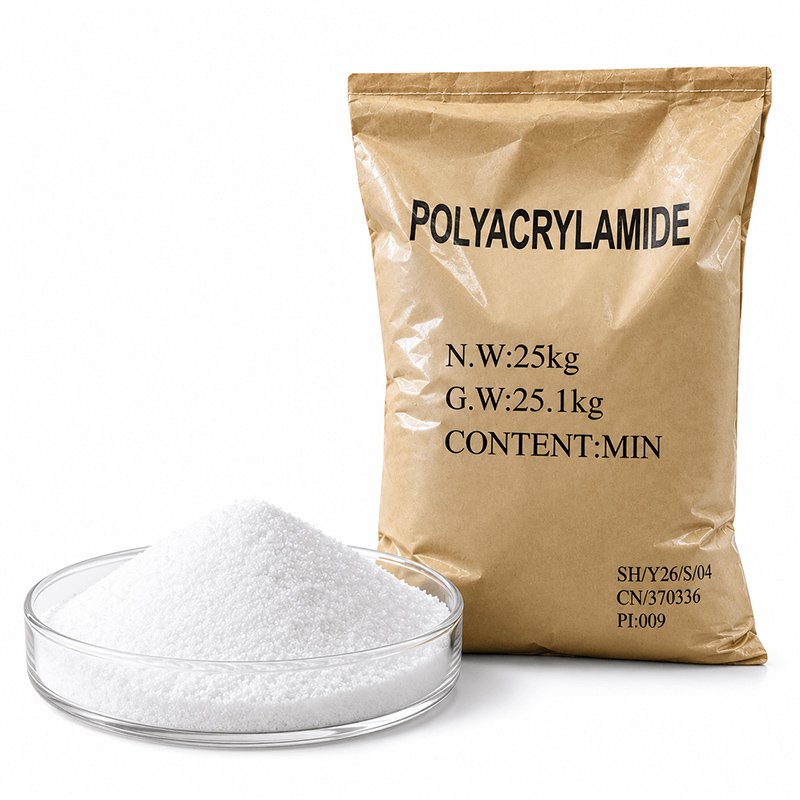
Anionic Polyacrylamide (APAM) is a water-soluble high molecular polymer copolymerized from acrylamide and acrylate monomers, with negatively charged functional groups on its molecular chains. Its mechanism of action is dominated by adsorption bridging, accompanied by a charge neutralization effect: the long-chain polymer can strongly adsorb multiple suspended particles to form coarse flocs; meanwhile, the anionic groups can neutralize a small number of positive charges in the system, assisting in destabilizing and aggregating particles. This product is widely used for solid-liquid separation and wastewater purification in various industries, supporting water resource recycling.